A regal 450-year-old residence, this fort was once the stronghold of the Kathi chieftains before it came under the Gohil Rajputs, a clan celebrated for its valour and refined culture. The Gohils trace their lineage to Mewar’s ancient rulers, their history interwoven with the fabled land of Vallabhi, once a flourishing seat of Buddhist and Jain learning, visited by travellers from faraway lands.
When Raol Shri Akshayrajji, son of Raol Shri Meghrajji of Vallabhipur, came to Dared generations ago, he made this village his home. He rebuilt and expanded the Darbargadh during a famine, giving work and sustenance to his people. Every stone here still carries the memory of his compassion, every courtyard breathes his legacy.
Centuries have passed, yet the Darbargadh remains a living presence, not a monument to the past, but a home that continues to echo with life, prayer, and quiet dignity.
Where stories of courage, devotion, and grace whisper through sandstone corridors, where time lingers, unhurried, there stands Darbargadh, Dared.
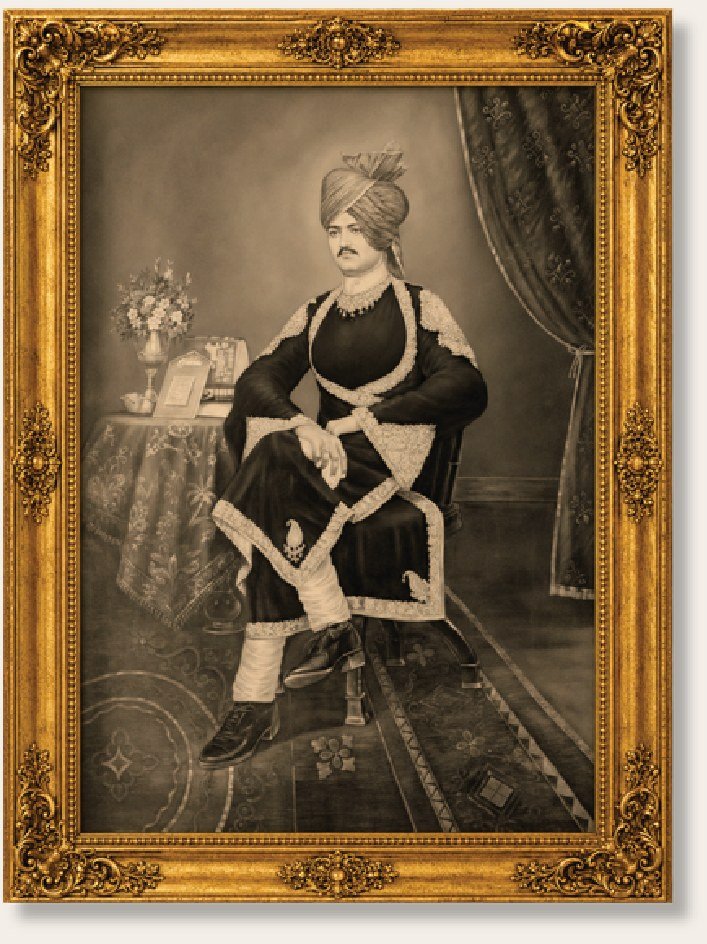
Thakore Saheb Meghraj Sinhji Gohil
Darbar Saheb Shri Pratap Sinhji Gohil
Restoration & Revival: A Heritage Reborn
The latest transformation of Darbargadh, Dared was a labour of love, bringing a 450-year-old structure back to life through sustainable restoration.
Eighty-five percent of the original materials, including wood, stone capitals, and ornate ironwork, were carefully reused. Each door, stair, and railing was revived by local craftsmen, preserving both history and livelihood. Creeper-covered verandahs temper the sunlight, while courtyards breathe with open sky and shade.
This was not just architectural work; it was an act of renewal. Local artisans were trained in heritage techniques; village families found work; forgotten crafts found expression again. Handmade tiles, antique fittings, and restored woodwork became a dialogue between past and present, a reminder that preservation, too, is a form of progress.
Today, Darbargadh, Dared stands as one of Gujarat’s most authentic examples of sustainable conservation, a fort where heritage and humanity coexist with quiet pride.